Refresh your starter at delivery
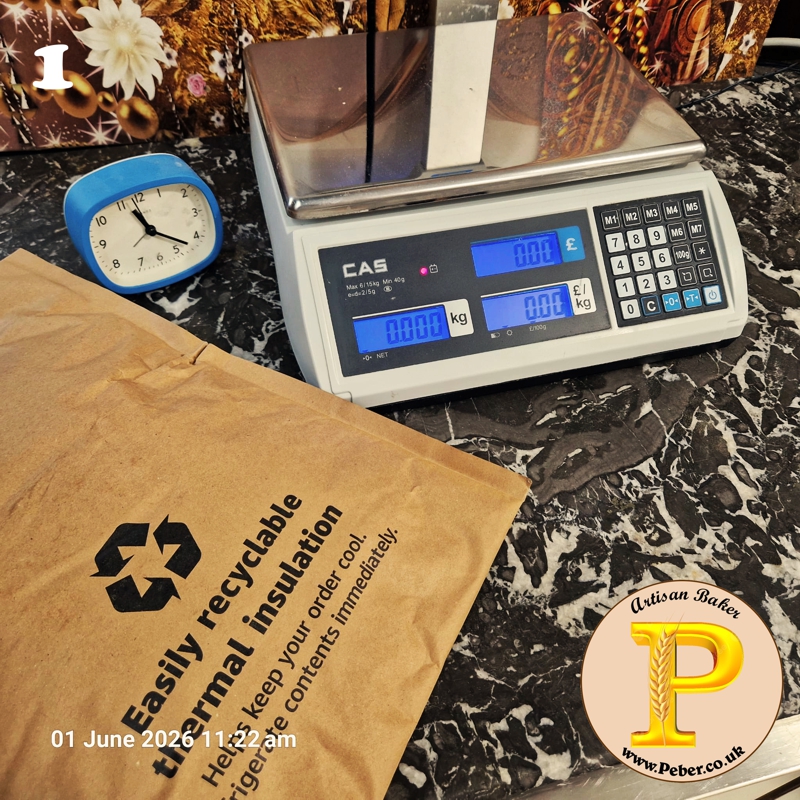
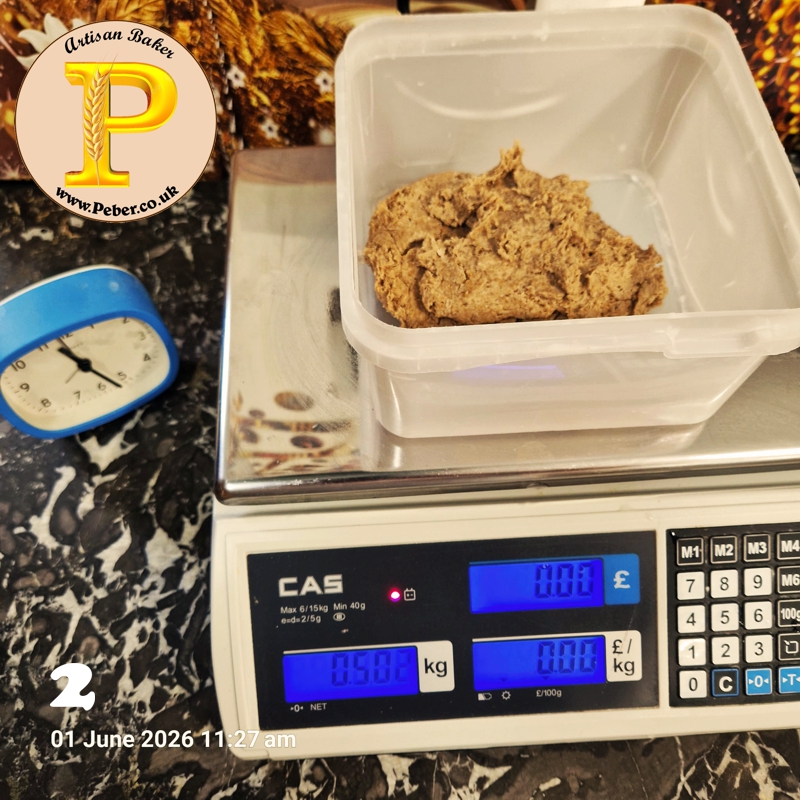
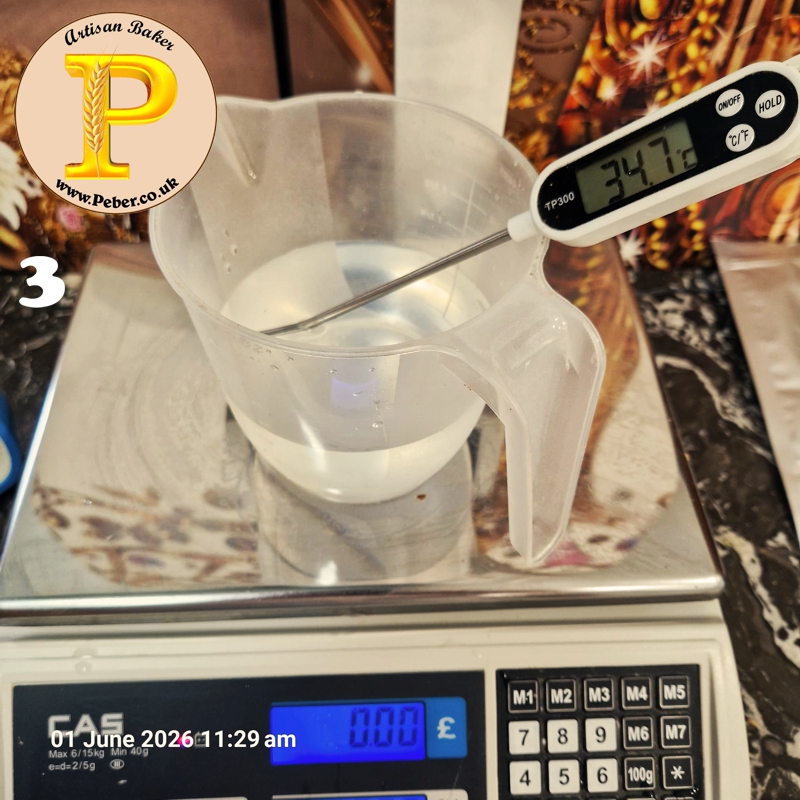
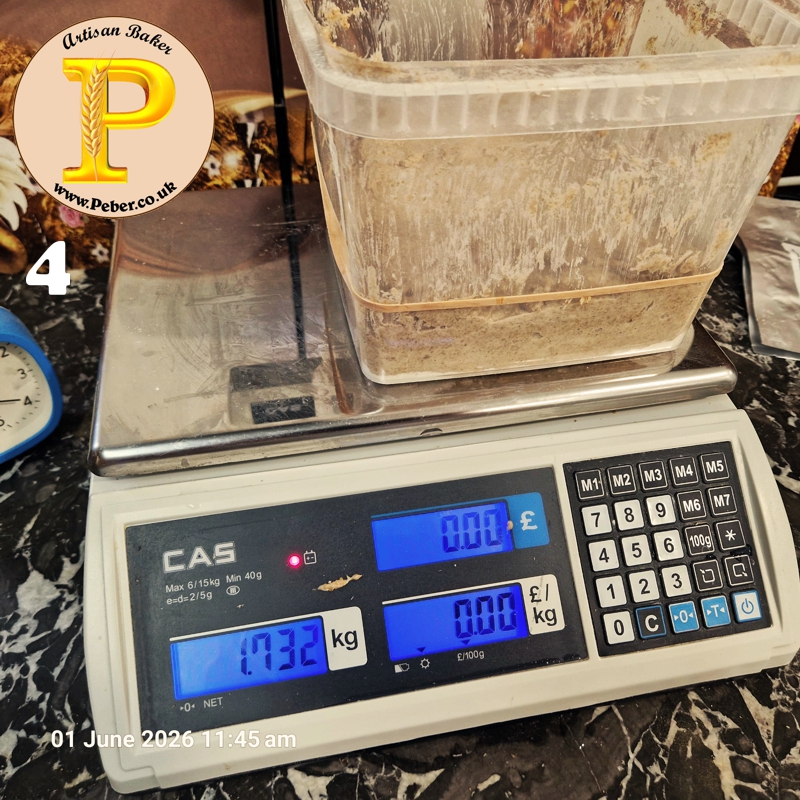
On the left, various staged of the making of stiff starter and how it will be delivered to you. By "stiff sourdough" we mean a stiff starter (low hydration, often around 50–60% hydration).
At delivery you want to convert it to a 1:1:1 feeding ratio (equal weights starter, flour, and water), you can do that in 2 single feeding easy operations while the full hydration is achieve at second feeding.
A bag of 600 gr of refreshing flour is included, together with their respective bags of flour (T130 Rye or T65 White )
Unlock 34 Years of Baking History
Peber’s Sourdough T130 Rye or T65 White Starter
Detailed Comparison
1. Fermentation Speed & Activity
- Rye: Whole rye flour contains the outer bran and germ, which are packed with wild yeasts, bacteria, and fermentable sugars. This makes a rye starter fast-acting and very lively.
- White: White flour is refined from only the inner endosperm, meaning it carries fewer natural microbes.
2. Flavour Impact on Bread
- Our Peber Rye starter is only used with bread : Produces more acetic acid (the sharp, vinegary sour tang) alongside complex, earthy, slightly fruity notes. Adding even a small percentage of rye starter to a white dough adds a noticeable depth of sourdough flavour. Rye Starter in Bread: Introduces enzymes that break down starch faster, making dough slightly stickier, but giving the finished loaf a moister, longer-lasting crumb and darker crust colour.
- Our Peber White starter is only used with Viennoiserie such as croissants : Promotes a higher proportion of lactic acid (creamy, yogurt-like, buttery notes). It gives pastries the classic "artisanal" sourdough taste—tangy enough to be distinct, but mild enough not to overpower other ingredients. White Starter in Viennoiserie: Helps build a strong gluten framework, making it easier to achieve an open, holey crumb and a tall, oven-spring rise.
Our present starter was first offered to us initially in the summer of 1992 while residing in Roquebrune sur Argens, Var, France by E. Cauvière, a French master baker and friend who represented France in the inaugural 1992 Bakery World Cup (Coupe du Monde de la Boulangerie) in Paris, leading the national team to a 1st-place victory as World Champion. He is well known for promoting traditional French sourdough techniques and artisan baking culture internationally spending decades training upcoming generations of French bakers in classical technique and competitive breadmaking.
3. Physical Behaviour
- Rye: Absorbs significantly more water than white flour due to non-gluten carbohydrates called pentosans. At 100% hydration (equal weight flour and water), a rye starter resembles a thick paste or wet clay rather than a pourable batter. It forms small, honeycomb-like air pockets instead of long, stretchy bubbles.
- White: Develops a strong gluten network. At 100% hydration, it forms a smooth, elastic, pourable batter that clearly doubles or triples in height with large, glassy air bubbles.
Which one Should You Choose?
- Go with a Rye Starter if:
- You want a low-maintenance, forgiving starter that rarely fails.
- You prefer a rich, tangy, complex sourdough flavour.
- Your kitchen runs cold (rye performs noticeably better at lower room temperatures).
- You regularly bake rye, whole wheat, or rustic country loaves.
- Go with a White Starter if:
- You are striving for maximum oven spring and an open, airy crumb.
- You prefer a lighter, milder sourdough taste.
- You want to bake delicate brioche, sweet doughs, or classic white croissants.
Why we use a Stiff Rye Starter?
We make a stiff starter to behave safer during expedition. Stiff starters maintain their peak longer and decay much slower in the refrigerator, making them hardier between feedings. Note : Peber’s only make expeditions of its Rye Starter in its stiff mode.
Expedited starters : A stiff rye starter at a lower hydration, combines the fermentation power and flavour depth of rye flour with the structural and biological advantages of a low-hydration starter. Rye flour is naturally high in sugars, enzymes (like amylase), and nutrients, which make it an exceptionally energetic environment for yeast and lactic acid bacteria. Combining rye with a stiff format yields distinct characteristics compared to a standard 100% hydration white starter.
- Favors Acetic Acid (More Tang & Complex Flavour):
High-hydration starters tend to promote lactic acid (creamy, mild sourness). Stiff starters with lower water content encourage acetic acid production, giving your bread a sharper, deeper, and more complex sourdough tang.
- Slows Down Fermentation Speed:
Rye ferments very fast at 100% hydration but reducing the water slows down enzymatic activity, giving you a wider peak baking window and an easier maintenance schedule.
- Improves Dough Structure:
Rye lacks gluten-forming proteins (gliadin and glutenin) and relies instead on pentosans (mucilage) for structure. Lowering the hydration in the starter reduces enzyme activity that normally breaks down gluten in the main dough.
Key Ratios
Standard starters are fed at 100% hydration (1 part flour to 1 part water by weight). A stiff starter ranges from 50% to 70% hydration.
- 50% Hydration (Very Stiff / Play-Doh Texture): 100g Rye Flour : 50g Water
- 60% Hydration (Standard Stiff / Dense Paste): 100g Rye Flour : 60g Water
- 70% Hydration (Moderately Stiff / Thick Mud): 100g Rye Flour : 70g Water
Note on Rye Flour: Whole rye flour absorbs significantly more water than white flour. A 60% hydration whole-rye starter will feel much stiffer than a 60% hydration white flour starter.
Maintenance & Feeding Routine from stiff to permanent 100% hydration
To permanently convert your mother starter from delivery as a stiff clay-like paste into a standard 100% liquid culture, two sequential feedings will fully re-balance the micro-organism ecosystem to a high-hydration environment.
==========================================================
YOUR RYE SOURDOUGH STIFF STARTER HAS ARRIVED!
==========================================================
Your starter was shipped fresh and dormant to ensure maximum micro-organism viability.
WHAT TO DO IMMEDIATELY UPON ARRIVAL:
1. INSPECT & UNPACK THE 600 GR STIFF STARTER
- Open at reception the bag and remove the stiff rye mass as 100% hydrated 1:1:1 would have not travel properly. Note that the bag may have expanded slightly—this is completely normal! Take a second note of the fact that the starter is fresh and not a dessicated powder.
You have been also received a 2.5 kg of our Margeride Rye, uses for refreshing your starter, of even make bread while using the Rye blended at 35 % with another flour -we use T110 Meule d’Auvergne at 65 %-
2. FIRST REFEEDs (DAY 1 - REVIVAL)
Feeding 1 : The Transition
- Open the bag and get a appropriate quantity for your need keeping the rest in your fridge at 4 Dg Celcius Let’s imagine you get 50 gr of the stiff starter. Mix it as below and after 3 hours put ii overnigh in your fridge
- 50 gr Stiff Rye Starter
- 250 gr Warm Water
- 250 gr Rye Flour
- Whisk the stiff starter into the warm water until completely dissolved.
- Stir in the flour to form a loose, battery paste.
- Allow it to ferment at room temperature until it peaks, bubbles throughout, and begins to recede slightly (about 3 hours depending on your ambient temperature).
- You have now 550 gr of your stiff starter and a new 550 gr transitional refreshed
Feeding 2 Locking Day 1 - in 100% Hydration
Use for instance 200 gr transitional starter from Feeding 1, then feed it at a standard ratio:
- 200 gr Transformed Liquid Starter
- 200 gr Warm Water
- 200 gr Rye Flour
Once this second build reaches peak, your starter is fully converted, stable, and ready for regular similar 100% hydration maintenance.
Bake well 😊
Francois
PEBER'S SOURDOUGH STIFF STARTER
A stiff sourdough starter (often called lievito madre or sweet starter in Italian baking or Levain Mére in French) is simply a sourdough starter maintained at a lower hydration than the standard 100% hydration liquid starter. We do expedition with this form of sourdougg starter as it is far safer to do this than send a more hydrated 1 . 1 . 1 product. A small bag of flour will be included in order to refresh it on arrival.
Instead of equal parts flour and water by weight, a stiff starter typically uses a ratio of roughly 2 parts flour to 1 part water (around 50% to 60% hydration).
Here is what it looks like, how it behaves, and why some bakers love it:
Physical Characteristics: What It Looks Like
Because it lacks excess water, a stiff starter doesn't look like a bubbly batter. Instead, it looks and feels like a tight, firm piece of bread dough.
- Texture: Dense, pliable, and smooth. It can be kneaded like bread dough, shaped into a ball, and even rolled up or laminated.
- Volume Change: Instead of bubbles rising to the surface and popping, gas gets trapped inside the tight gluten matrix. When it rises, it expands dramatically—often tripling or quadrupling in volume—resembling a smooth, inflated balloon or a highly aerated, spongy dough block when sliced open.
- Scent: It smells deeply fruity, alcoholic, and mildly tangy, but without the sharp, vinegary punch or acetone smell that a neglected liquid starter can get.
The Science: Acidity and Flavour Profile
The main reason bakers convert a liquid starter to a stiff one is to manipulate the flavour of their bread by altering the balance of acids produced by the wild yeast and bacteria. As for Peber we do it as it travels better and reach you next day at its peak, ready to refresh it.
- Lower Total Acidity: Stiff starters favour wild yeast activity over lactic acid bacteria. The wild yeast thrives in the dense environment, while the bacteria produce less total acid.
- Mild, Sweet Flavour: The acids that are produced lean toward a milder flavour profile. It reduces the sharp, sour twang, making it perfect for enriched breads where you want the sourdough leavening power but not the aggressive sour flavour (like croissants, brioche, or panettone).
- Stronger Gluten Structure: Less acid means less enzymatic breakdown of gluten. This gives the final bread dough better structural integrity, a higher rise, and a more open crumb.
Maintenance and Feeding Mixing Method
- Stirred easily with a spatula
- Kneaded by hand or mixed in a stand mixer
Storage
- Jars, bowls, or plastic containers
- Jars (often with a cross cut into the top) or bound tightly in canvas/rope (legato method)
Feeding Frequency
- Needs frequent feeding; degrades quickly at room temp
- Ferments slower; can go longer between feeds safely
- Because it ferments more slowly, a stiff starter has a wider "peak" window, meaning you have a larger timeframe to bake with it before it collapses and turns overly acidic.
A few notes
- The old stiff starter contributes some flour and water already, so the overall hydration of the mixture won't be exactly 100% immediately.
- After one or two 1:1:1 feedings, the starter will behave like a typical liquid starter and the hydration difference from the original stiff starter becomes negligible.
- If the stiff starter has been refrigerated or inactive, allow it to rise and peak before feeding again.